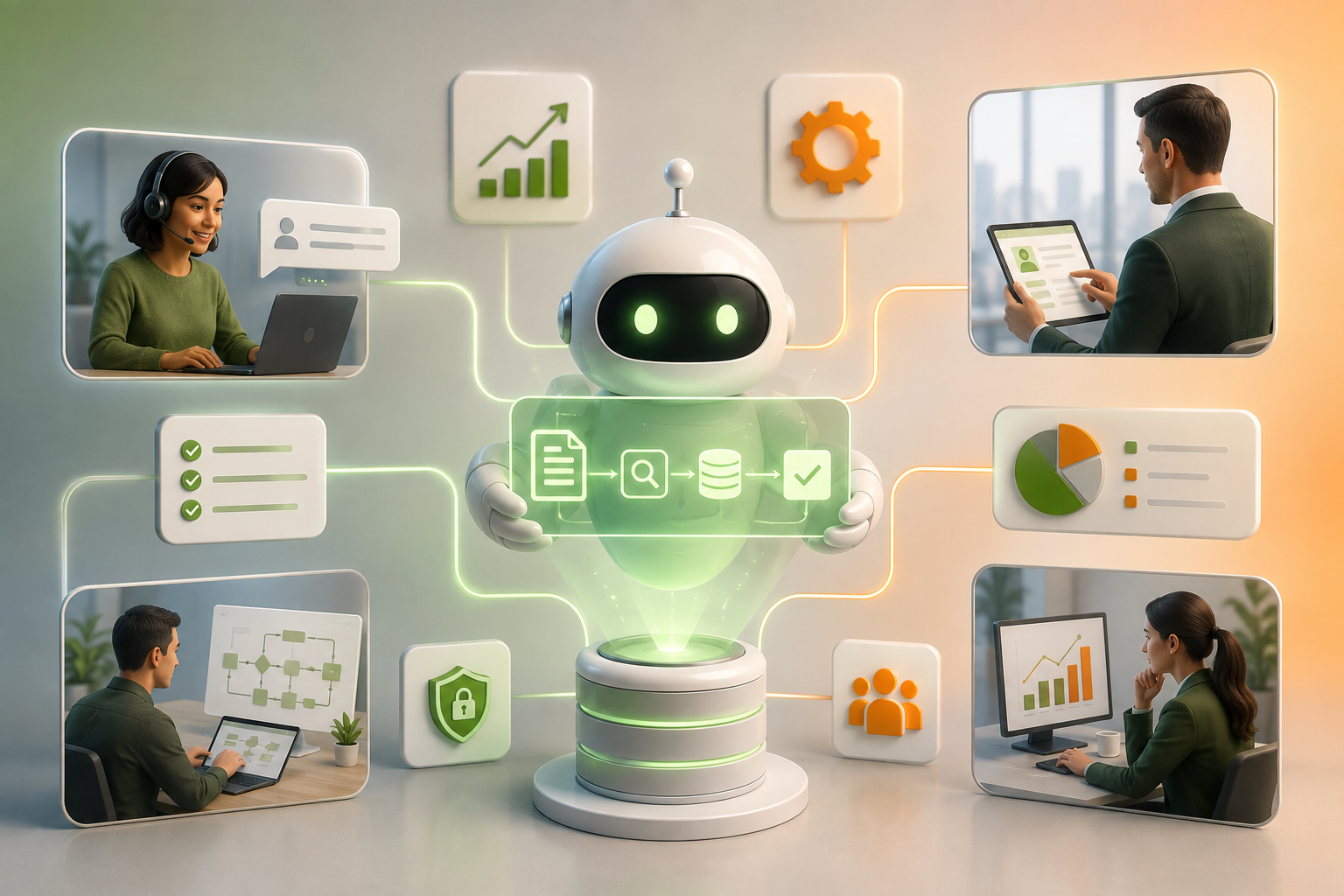
Artificial intelligence has moved far beyond asking a chatbot to write an email or summarize a document.
In 2026, the conversation is increasingly about AI agents—systems that can understand a goal, interact with software and data, perform multiple steps, and complete parts of a workflow with limited human intervention.
Gartner lists multiagent systems among its major strategic technology trends for 2026, alongside AI-native development platforms, domain-specific language models, and AI security platforms.
For businesses, this raises an important question:
What could an AI agent actually do inside your organization?
What is an AI agent?
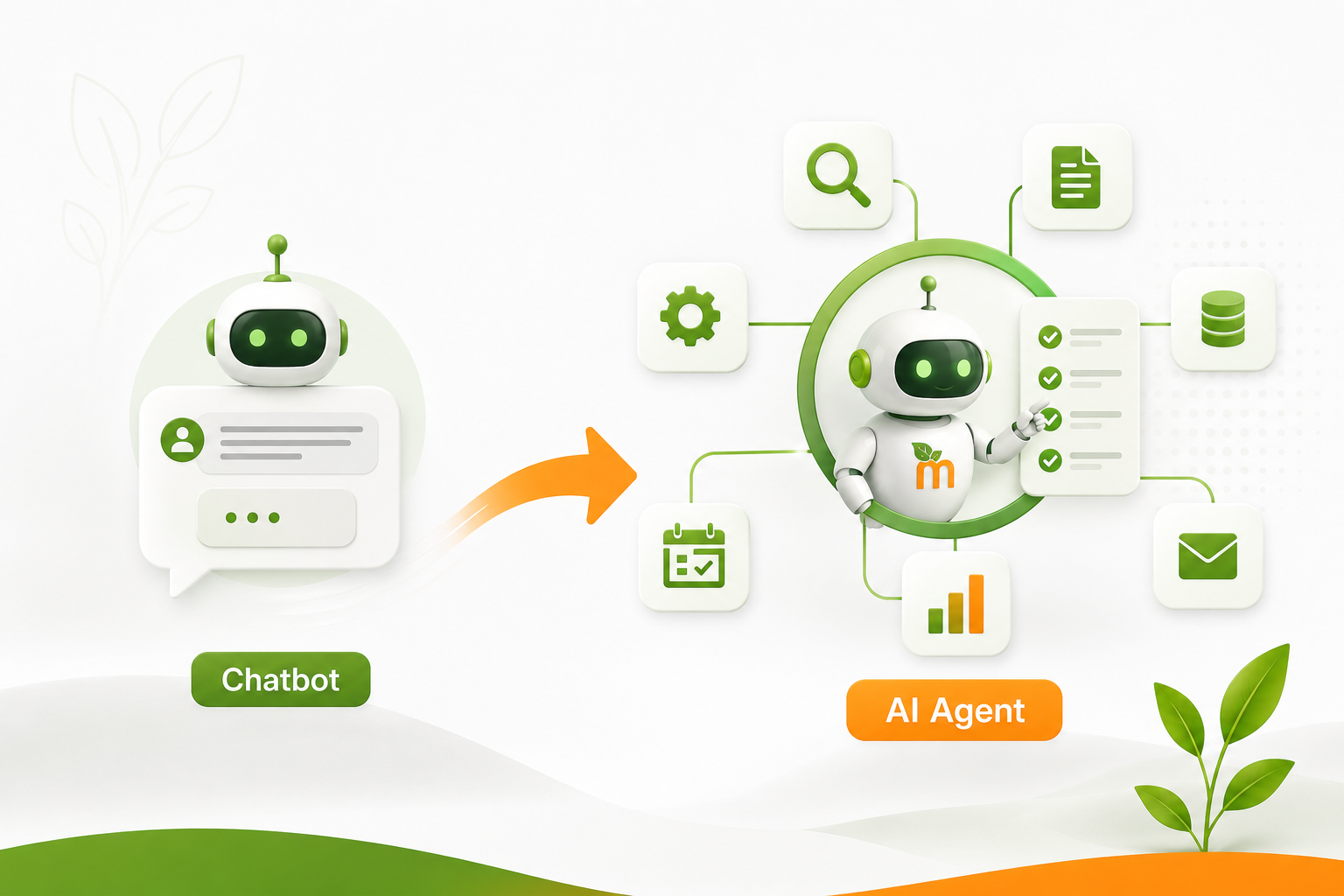
A traditional chatbot generally waits for a question and returns an answer.
An AI agent can potentially go further.
For example, imagine a customer submits an inquiry through your website.
Instead of simply generating a response, an agent could potentially:
- Read the inquiry
- Identify the customer's requirement
- Check available information
- Create a lead
- Update a CRM
- Notify the appropriate employee
- Schedule a follow-up
- Generate a summary for the sales team
The important shift is from answering questions to completing workflows.
Where can businesses use AI agents?
AI agents can be useful in many areas.
Customer Service
Agents can help categorize inquiries, answer common questions, summarize conversations and route complex requests to employees.
Sales
An agent can assist with lead qualification, customer research, follow-ups and reporting.
Operations
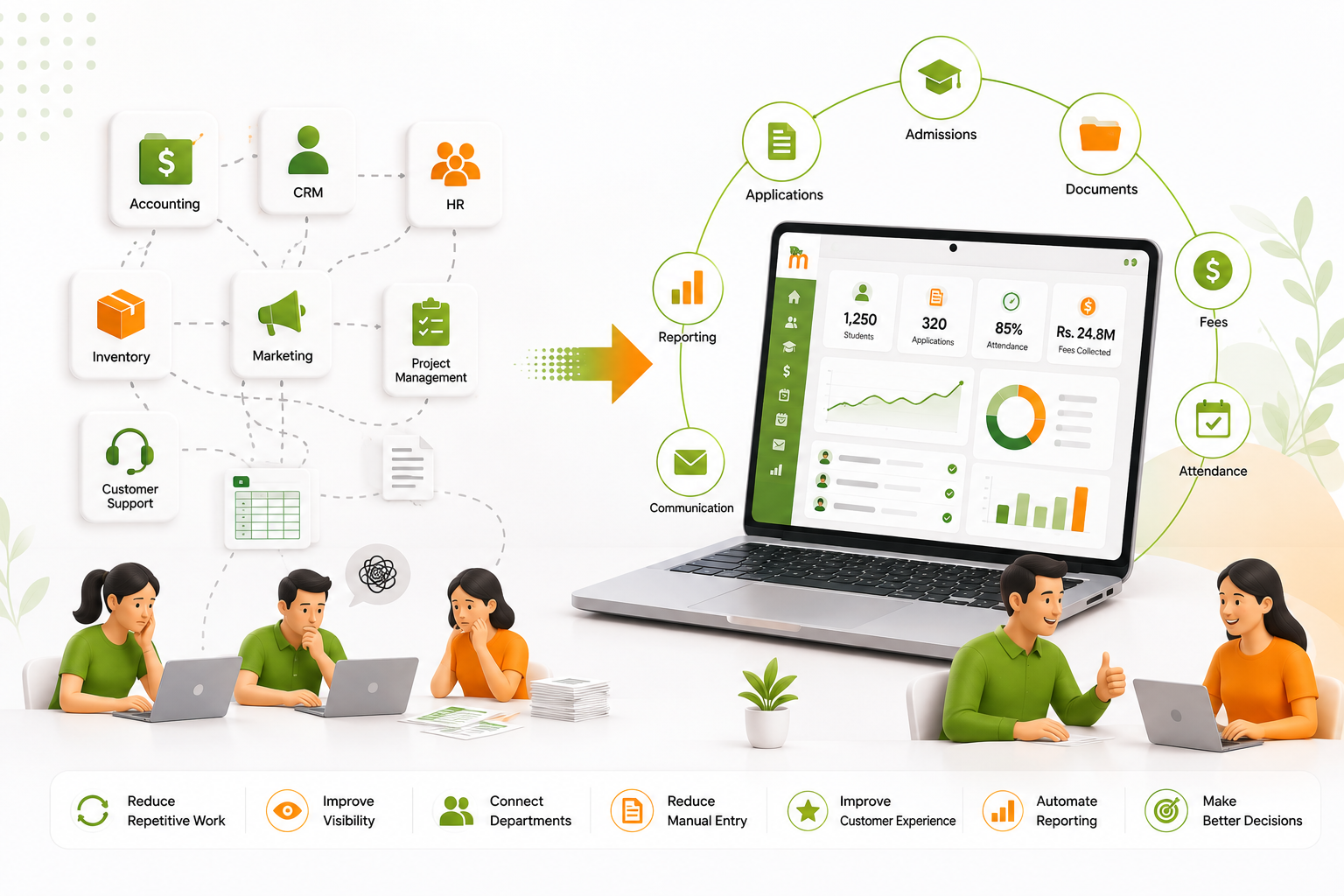
Businesses can automate repetitive processes such as document processing, internal approvals, reporting and data collection.
Finance
AI-assisted workflows can help organize invoices, reconcile information and generate reports, while sensitive financial decisions remain subject to appropriate human approval.
Internal Knowledge
Instead of searching through multiple documents, employees could interact with an intelligent system that retrieves relevant organizational information.
AI agents are not simply "better chatbots"
This distinction matters.
A chatbot primarily provides information.
An agent can potentially take actions.
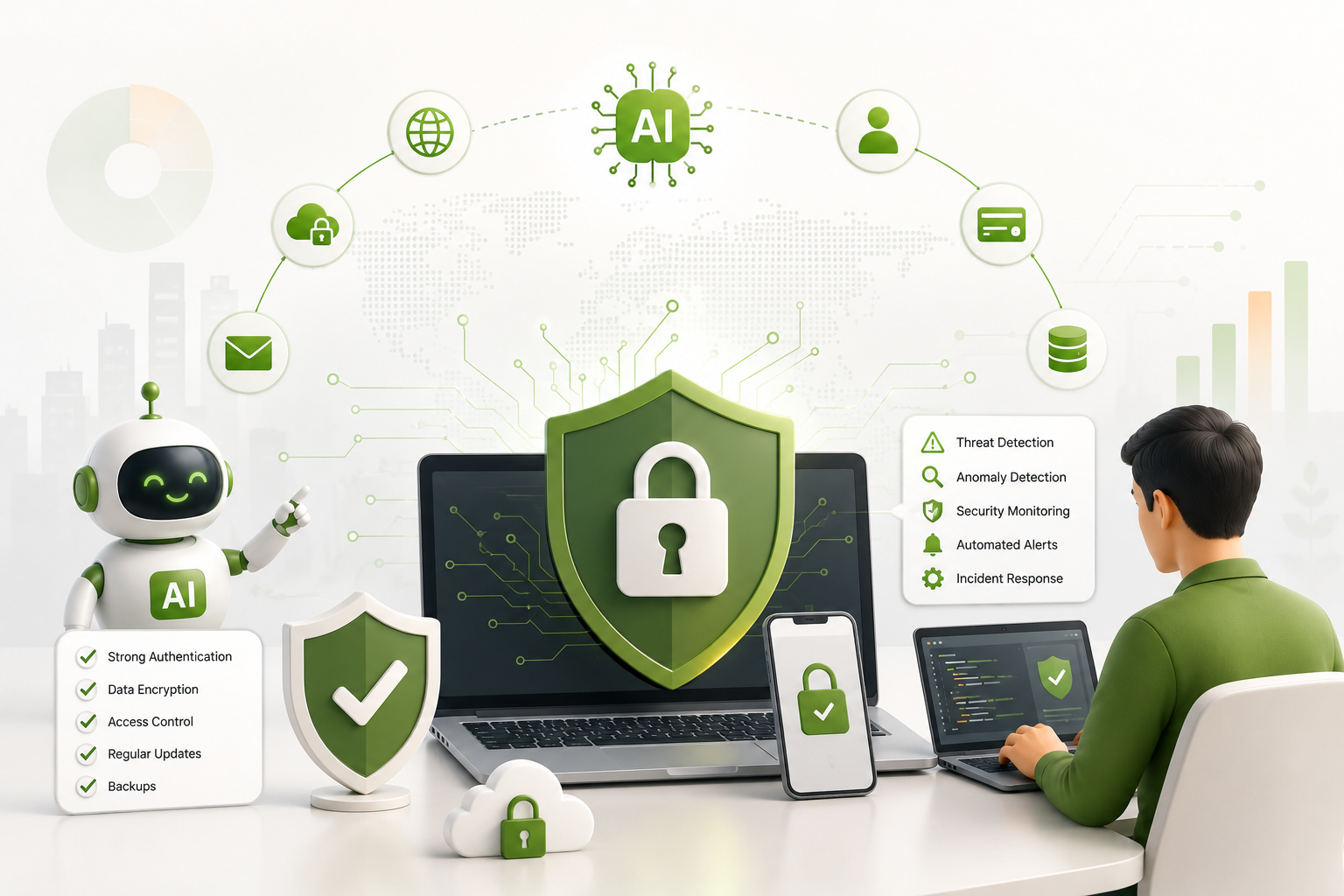
That means businesses need to think about permissions, identity, monitoring, data access and accountability.
McKinsey notes that the adoption of agentic AI is expanding the cybersecurity attack surface because autonomous systems may interact with infrastructure, identities and business processes.
What businesses should consider before implementing agents
AI automation should begin with the business problem—not the technology.
Before building an AI agent, ask:
- What process are we trying to improve?
- How much repetitive work does it involve?
- What information does the process require?
- Which systems must the AI access?
- What decisions should remain with humans?
- How will actions be monitored?
- What happens if the AI makes a mistake?
The objective should not be:
"We need AI."
It should be:
"We need to make this business process faster, more reliable and easier to manage."
The future is not AI replacing every employee
The more practical direction is human + AI collaboration.
AI can handle repetitive work while people focus on decisions, relationships, creativity and strategy.
For businesses, that can mean building smaller, more efficient digital teams rather than simply adding more software tools.
Where Maanjari Technology fits
At Maanjari Technology, we believe technology should be designed around the way a business actually operates.
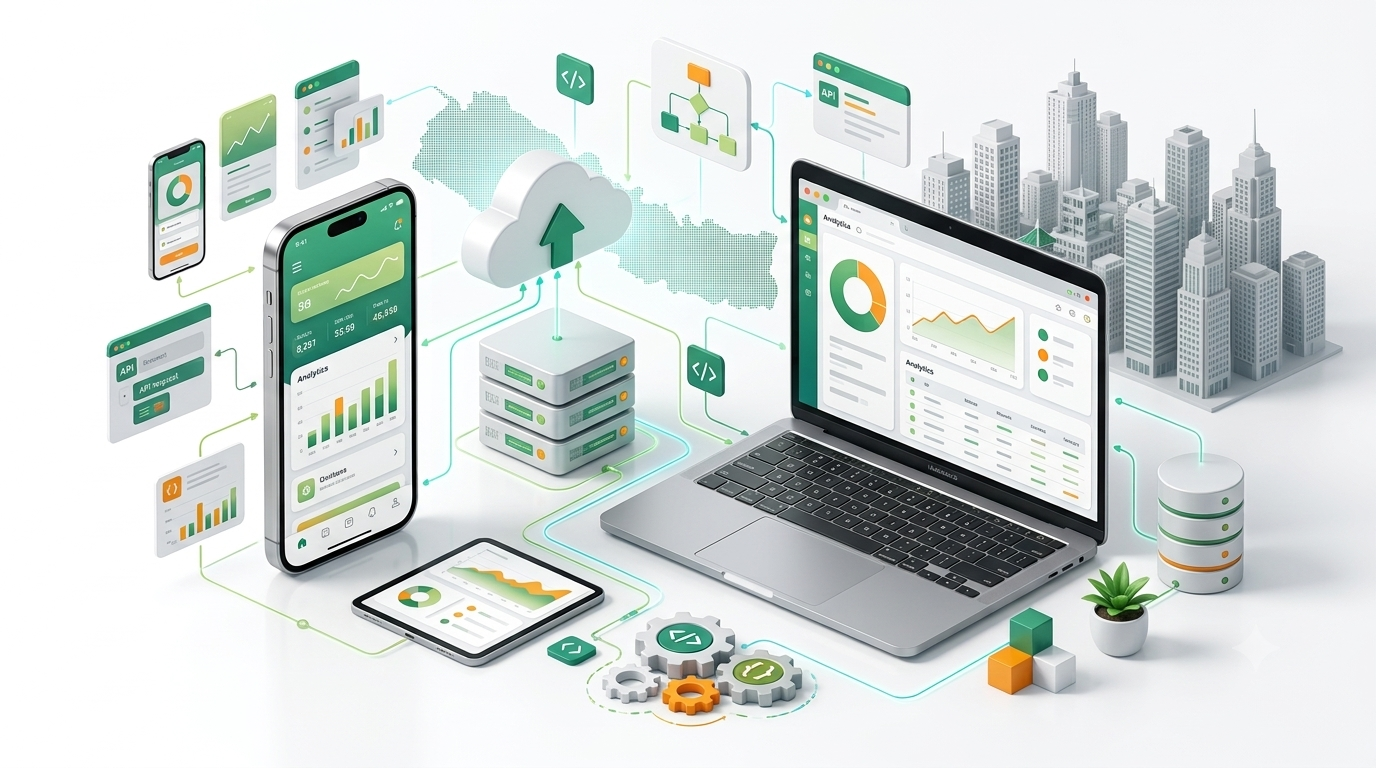
Whether you need a custom business platform, dashboard, automation workflow, web application or mobile application, the first step is understanding your process.
The best technology is not the technology with the most features.
It is the technology that solves the right problem.
Ready to explore what AI automation could do for your business?
Visit maanjari.com and talk to our team about your digital requirements.